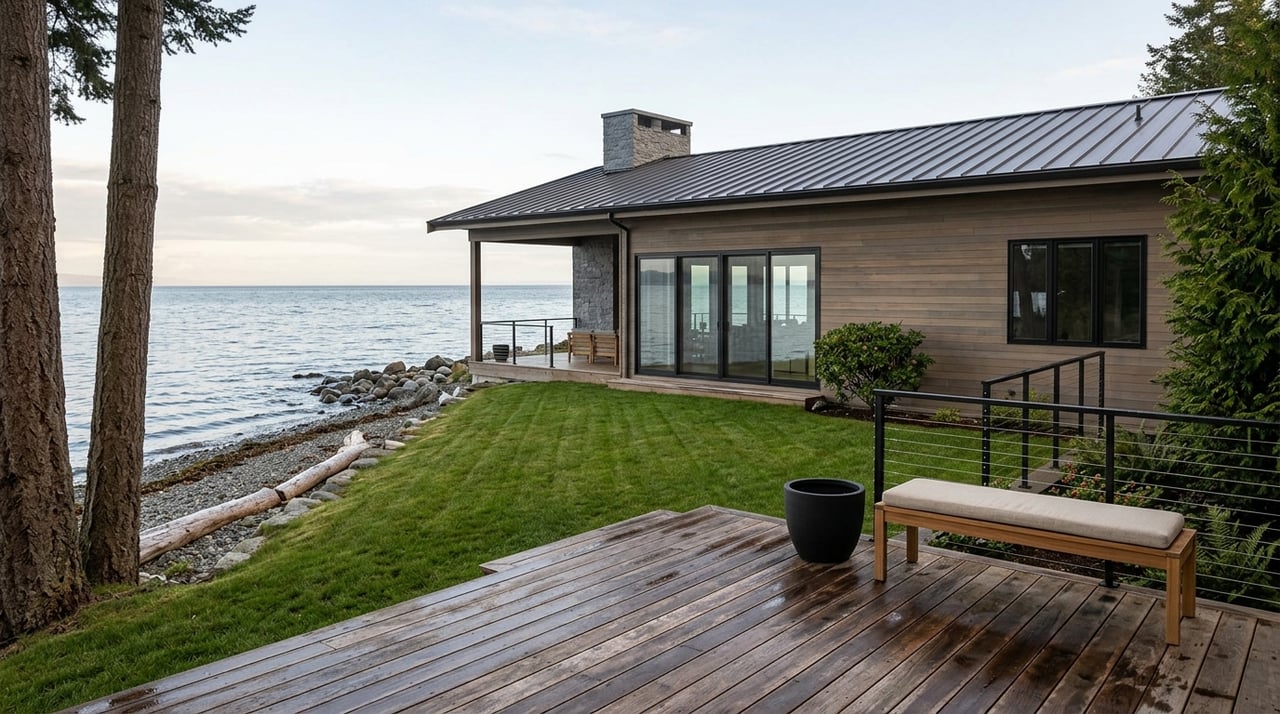
Selling a waterfront home on Bainbridge Island is not the same as selling any other property. Between shoreline rules, flood-zone considerations, private utilities, and buyer expectations for polished presentation, the prep work matters just as much as the pricing strategy. If you want a smoother sale and a stronger first impression, it helps to start early and prepare with a clear local plan. Let’s dive in.
Start With The Bainbridge Waterfront Basics
A Bainbridge waterfront home comes with details that buyers will look at closely. The City of Bainbridge Island notes that shoreline development within 200 feet of ordinary high water falls under shoreline review, and even some vegetation work near the shoreline may require additional approvals.
That means your pre-sale checklist should begin with what is already on the property and what has been changed over time. If you have completed work near the shoreline, added exterior features, or updated structures such as a dock or bulkhead, it is smart to gather permits and records before your home goes live.
Flood risk is also part of the local story. The city says flooding is the most common hazard in Kitsap County, and Bainbridge has the largest number of buildings in the special flood hazard area in the county. For you as a seller, that makes documentation and property condition more than a side note. It becomes part of how you build buyer confidence.
Verify Utilities Before Cosmetic Updates
Before you schedule paint, staging, or landscaping, confirm how the home is served. Bainbridge utility service varies by area, and not every waterfront property is connected to the same systems.
The city notes that public water service includes areas such as Winslow, Rockaway Beach, and the Public Works Facility area, while sewer service includes Winslow and South Island neighborhoods. Depending on your location, your home may instead rely on septic, private water, or another system.
This matters because buyers often ask these questions early, especially for waterfront homes. If you know exactly what serves the property and have records ready, you can avoid delays and present the home with more clarity from day one.
Gather Disclosure Documents Early
In Washington, seller disclosures are not something to leave until the last minute. State law requires a completed disclosure statement for improved residential property, delivered within five business days after mutual acceptance unless waived or exempt.
For waterfront sellers, the form covers several areas that can take time to document. It asks about easements, water source, water rights, sewer or on-site sewage systems, permits, pumping and inspection dates, bedroom count, and repairs or changes to the sewer or septic system.
The easiest way to reduce stress later is to build your disclosure file before listing. That often means collecting maintenance records, permits, repair invoices, septic information, and any documents tied to shoreline improvements while there is still time to fill in gaps.
Schedule Septic And Water Reviews If Needed
If your waterfront home is not connected to city sewer or city water, this step is especially important. Kitsap Public Health recommends a property conveyance inspection before the final sale of a septic-connected home.
The district can review records, inspect the system, and provide a written report. In 2025, it completed 1,743 septic conveyance inspections, and 27% showed significant deficiencies. That is a strong reason to find out about issues before a buyer does.
If the property is served by a private or Group B water system, Kitsap Public Health says a Water Status Report is required before sale, and the application should be submitted about 30 days before transfer. In 2025, 44% of private water status reports found significant problems.
For sellers, the takeaway is simple: test and verify early. A surprise tied to septic or water can disrupt timing, renegotiation, and buyer confidence.
Organize Shoreline Improvement Records
Waterfront buyers usually want more than a beautiful view. They also want to understand the condition, legality, and history of waterfront features.
If your property includes a dock, bulkhead, stairs to the beach, shoreline stabilization, or similar improvements, gather every record you can find. Bainbridge permit guidance notes that most construction requires permits, and shoreline development involves an added review step.
Even if an improvement looks minor or older, buyers may ask when it was installed, whether it was permitted, and what repairs have been completed. A clean, organized file can make your listing feel more transparent and well cared for.
Focus On Presentation, Not Major Remodeling
When you prepare a waterfront home for sale, the goal is not always a full renovation. In many cases, the better move is thoughtful presentation that helps buyers focus on the setting, light, layout, and water connection.
The National Association of Realtors describes staging as decluttering and styling a home so buyers can imagine living there. In its consumer guide, 83% of buyers’ agents said staging makes it easier for buyers to visualize the property as their future home, and about half of sellers’ agents said staging reduced time on market.
That is especially relevant for Bainbridge waterfront homes, where buyers are often responding to lifestyle as much as square footage. A calm, uncluttered presentation helps the home feel elevated without distracting from the shoreline setting.
Highlight The Waterfront Lifestyle
Your home should photograph and show in a way that brings the waterfront experience forward. That includes view corridors, outdoor seating areas, decks, shoreline access, and any dock or moorage features.
Zillow reports that most buyers begin their search online, and 27% say high-resolution photos are the most important listing feature. It also reports that 70% say a virtual tour gives them a better feel for the home than photos alone.
For your sale, that means listing media should do more than document rooms. It should capture how the home lives, how the light moves across the water, and how indoor and outdoor spaces connect.
Declutter For Privacy And Scale
Luxury waterfront sellers often value discretion, and good prep supports that too. Packing away personal items, minimizing visual clutter, and securing valuables can make the home feel larger and more peaceful while also protecting your privacy.
The National Association of Realtors recommends securing valuables and limiting personal items during the listing period. If virtual staging is used, any material alteration should be disclosed.
A clean and private presentation helps buyers focus on the home itself. It also supports a more concierge-style showing process, which can be especially important if you are still living in the property during the sale.
Time Your Launch With Enough Runway
Many sellers think about timing in terms of the week they want to list. Waterfront homes often need a much longer runway than that.
Zillow’s timing analysis notes that many sellers start preparing three to four months before listing. That timeline makes sense on Bainbridge, where you may need time for inspections, document collection, selective repairs, staging, photography, and launch coordination.
Nationally, existing-home sales usually rise in spring and summer. Zillow’s 2026 analysis also found that timing is highly local, with Seattle showing a strong window in the first half of April in that study.
The lesson is not that there is only one perfect week to list. It is that your best launch usually happens after the home is fully prepared, photo-ready, and backed by complete information.
Consider A Phased Marketing Rollout
If privacy matters to you, a phased rollout can offer more control early in the process. On the Compass platform, that can include pre-market options such as Private Exclusives and Coming Soon before a full MLS debut.
This kind of rollout can be helpful if you want to test readiness, create a measured introduction, or keep the process more discreet while final prep is underway. At the same time, discretion should not replace broad exposure once the home is truly ready.
The MLS remains important because it helps reach the largest pool of serious buyers and supports stronger market visibility. In many cases, the best strategy is to prepare quietly, then launch broadly when your home shows at its best.
Use Concierge Support To Simplify Prep
For many waterfront sellers, the hardest part is not knowing what to do. It is managing all the moving parts at once.
Compass Concierge can help front the cost of approved services such as staging, flooring, painting, landscaping, seller-side inspections and evaluations, and moving or storage, with zero due until closing. For a high-value waterfront property, that can make it easier to complete the right prep work without rushing decisions.
A concierge approach also helps keep the process organized. Instead of juggling vendors, timelines, and presentation choices on your own, you can move through the sale with a more curated plan.
A Smart Bainbridge Waterfront Prep Checklist
Before your home goes on the market, aim to have these steps completed:
- Verify whether the property is on city sewer, septic, public water, or private water
- Gather permits, invoices, and repair history for shoreline features and exterior improvements
- Start your Washington disclosure paperwork early
- Schedule septic conveyance inspection if the home uses septic
- Order a Water Status Report if the home uses a private or Group B water system
- Declutter and secure personal items and valuables
- Prepare key view spaces, decks, and shoreline-facing rooms for photography
- Coordinate professional staging, photography, and virtual tour planning
- Build a launch timeline that allows for prep before going public
Selling a Bainbridge waterfront home is part property preparation and part story development. When your records are complete, your condition questions are addressed, and your presentation reflects the lifestyle buyers are searching for, your home enters the market from a position of strength.
If you are thinking about selling, the right guidance can make the process feel far more manageable. The Amy McFarland Team offers a warm, concierge-level approach to waterfront preparation, marketing, and launch strategy on Bainbridge Island.
FAQs
What should you do first before selling a Bainbridge waterfront home?
- Start by confirming shoreline-related property details, utility service, and any records tied to permits, septic, water systems, docks, or bulkheads so you can identify issues early.
Does a Bainbridge waterfront home need septic inspection before sale?
- If the property is connected to septic, Kitsap Public Health recommends a property conveyance inspection before the final sale and can provide a written report.
Do Bainbridge waterfront sellers need water system paperwork?
- If the property is served by a private or Group B water system, Kitsap Public Health says a Water Status Report is required before sale and should be requested about 30 days before transfer.
Why do shoreline permits matter when selling a Bainbridge home?
- Buyers may ask for proof that shoreline-area improvements were properly permitted, especially for work involving docks, bulkheads, landscaping changes, or structures near the water.
How far ahead should you prepare a Bainbridge waterfront home for listing?
- A good rule of thumb is to begin three to four months before your target listing window so you have time for inspections, records, staging, and marketing prep.
What marketing matters most for a Bainbridge waterfront listing?
- High-resolution photography, virtual tours, and media that clearly show water views, outdoor living, shoreline access, and the overall waterfront lifestyle are especially important.